Following strong early acceptance in Lagos, the Nigerian-built smart mobility platform is deepening its national footprint with Abuja operations and KlimateRide Business—a dedicated offering that enables organisations to secure corporate discounts, purchase rides in bulk and manage staff mobility more efficiently.
Nigeria’s urban mobility market is entering a decisive new chapter—and KlimateRide is moving with purpose to help shape what comes next.
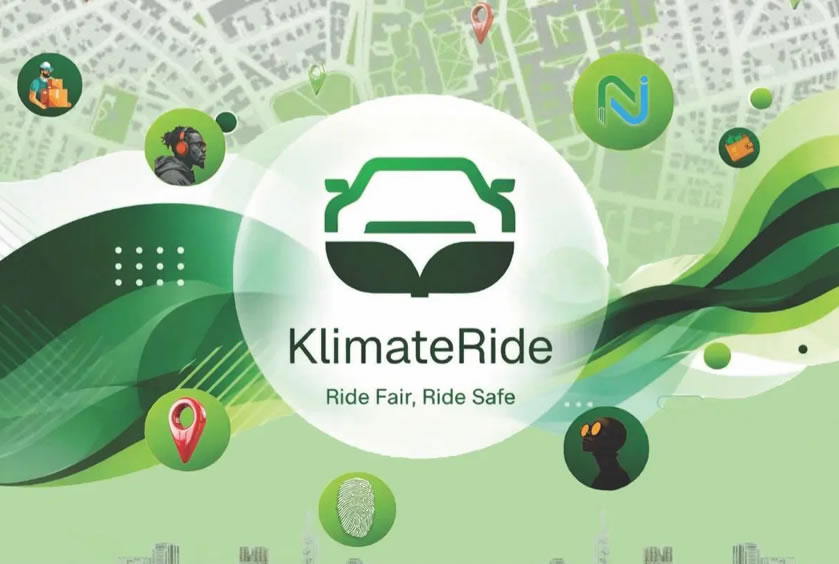
Following its strong early market acceptance in Lagos, KlimateRide, the artificial intelligence-driven ride-hailing and delivery platform developed by Netzence Sustainability Limited (Netzence), is expanding its commercial operations to Abuja. Alongside the expansion, the company is introducing KlimateRide Business, a corporate mobility solution created for businesses, institutions and other organisations that need safer, more accountable and more cost-effective transportation for their people and operations.
The expansion marks a pivotal stage in KlimateRide’s growth. By connecting consumer mobility with a dedicated corporate offering, the platform is broadening its relevance beyond individual trips and positioning itself as essential mobility infrastructure for households, employers and institutions.
KlimateRide’s ambition is to build a strong, locally responsive and smartest mobility ecosystem, one capable of delivering dependable journeys today while laying the foundation for safer, smarter and more sustainable transportation at national scale.
According to the Founder and CEO of Netzence, Associate Professor Sadiq Sani, KlimateRide’s entry into Abuja builds on encouraging early traction and successful case studies in Lagos, where the platform was tested for safety, low-cost, and carbon incentives and has recorded strong interest from drivers and riders since launch. Its growing ecosystem has reached more than 1,500 driver-partners and over 9,000 registered riders across Lagos and Abuja, providing an important foundation for the next stage of commercial growth.
“The choice of Abuja is strategic and based on societal, economic, people, and knowledge impacts. As Nigeria’s capital, the city combines daily commuter demand with a high concentration of public institutions, private companies, development organisations, civil societies, professional services firms, hospitality businesses, and growing residential districts. Its mobility needs are therefore both personal and institutional: staff must travel to offices and meetings; executives require dependable movement; organisations host visitors; documents and packages must cross the city; and employers increasingly need a reliable, safe, and sustainable alternative to fragmented transport arrangements and repeated staff reimbursements, said Associate Professor Sadiq Sani”
By expanding to Abuja, KlimateRide is bringing its integrated mobility model into a market where service reliability, safety, security, visibility and administrative control are especially important. The platform’s Abuja operations will support everyday riders while creating a structured channel through which organisations can manage recurring transport demand.
The expansion also strengthens KlimateRide’s two-city growth strategy. Lagos provides extraordinary scale, density and commercial intensity. Abuja brings institutional concentration, planned districts and significant corporate mobility demand. Building strong operations across both markets gives Netzence the opportunity to demonstrate that an indigenous smart-mobility platform can adapt to distinct urban environments without losing its focus on service quality.
At the centre of the Abuja expansion is KlimateRide Business, a dedicated corporate offering intended to change how organisations procure, fund and manage mobility.
For many businesses, staff transportation is still handled through disconnected processes: employees pay for trips personally, submit claims, wait for reimbursement and provide receipts that finance teams must verify manually. Other organisations depend on multiple informal vendors without consistent pricing, service standards or journey visibility. The result is administrative burden, limited cost control and an uneven experience for staff.
We want to make transportation easier, cheaper and greener – Oloche
How strategic partnerships brought the Itsekiri Global Homecoming to life
KlimateRide Business offers a more coordinated alternative. Participating organisations can access corporate discounts for staff mobility and purchase rides in bulk, allowing them to plan transportation requirements more efficiently and unlock value through aggregated demand. The service is relevant to routine commuting, authorised business travel, client and visitor movement, airport transfers, meetings, events, shift transportation and other approved organisational journeys.
For employers, the proposition is compelling: mobility can move from an unpredictable series of individual expenses to a deliberately procured corporate service. Bulk purchasing can support better budgeting and cost management, while corporate discounts can extend the value of each transport allocation. It can also reduce the friction associated with repeated cash advances and reimbursements, enabling internal teams to focus on their core responsibilities.
For staff, the value is equally practical. Access to an approved mobility option can make business travel simpler, more consistent and more reassuring; particularly for employees travelling early, late or between unfamiliar locations. For organisations competing to attract and retain talent, structured mobility support can also form part of a wider employee wellbeing and productivity proposition.
KlimateRide Business is designed for organisations of different sizes: large employers with recurring staff-mobility demand; small and medium-sized enterprises seeking greater cost discipline; hotels and event businesses arranging guest movement; development organisations coordinating field and meeting travel; and public institutions that require a more structured approach to authorised journeys. It also creates a platform for future corporate and institutional partnerships as KlimateRide expands its footprint.
“KlimateRide Business provides real-time visibility and accountability for staff travel, contributes to Nigeria’s Nationally Determined Contributions (NDCs), introduces sustainability reporting for Corporate Social Responsibility (CSR) and grants/funding mechanisms, and increases brand visibility and recognition. KlimateRide Business is free for all organisations, said Associate Professor Sadiq Sani.”
Nigeria’s ride-hailing market is large, dynamic and increasingly sophisticated. Riders expect safety, affordability and dependable vehicle availability. Drivers need viable earnings in the face of rising operating costs. Businesses require greater control, accountability and value from staff transportation. Platforms that respond effectively to all three groups will be best positioned for enduring relevance.
KlimateRide has developed its proposition around this intersection of needs. Its consumer service supports everyday journeys; its driver model seeks to sustain the people who make the network function; and KlimateRide Business converts recurring organisational travel into a structured, scalable service.
Rather than applying a generic mobility template, the platform has been built around the daily realities of Nigeria’s economy, high vehicle and fuel costs, driver sensitivity to commissions, significant safety concerns, fragmented logistics demand, the importance of affordability and the need to combine the movement of people with the movement of goods.
Its commission structure allows driver-partners to retain almost 100 per cent of fares, creating a strong economic proposition for drivers seeking a platform on which increased activity can translate more directly into improved earnings. This driver-centred approach is strategically important: a healthy supply network supports better availability, shorter waiting times and a more consistent experience for riders and corporate users.
KlimateRide’s competitive position will therefore be defined by more than technology alone. Long-term growth will depend on driver economics, customer trust, responsive local support, constructive regulatory engagement, reliable operations and the capacity to serve both consumers and institutions. These are the foundations around which KlimateRide is building its national proposition.
KlimateRide combines competitive mobility with a safety-focused technology architecture. Its features include verified driver-partners, real-time trip monitoring, emergency SOS functionality, trip-sharing capability and anonymised communication. These tools are intended to strengthen accountability throughout each journey and respond to one of the most important factors influencing transport choices in Nigeria: personal security.
Artificial intelligence and data analytics support trip allocation, route optimisation and operational decision-making. As activity grows across Lagos and Abuja, the platform can gain a richer understanding of travel patterns, areas of high demand and service performance, allowing it to deploy resources more intelligently and improve the user experience.
For corporate users, this technology-led approach is especially important. Organisations do not require transportation alone; they require confidence that an approved service can support staff responsibly and operate with consistency. KlimateRide Business connects the convenience of app-based mobility with a more structured organisational proposition centred on value, safety and control.
The platform also integrates ride-hailing with delivery services. This broader mobility architecture means the same ecosystem can support passenger journeys as well as the movement of packages and business items, creating additional utility for companies and additional earning opportunities for driver-partners.
KlimateRide sits within the wider sustainability technology ecosystem of Netzence Sustainability Limited. Its model brings together mobility, logistics, artificial intelligence, safety technology and environmental responsibility. As electric, hybrid and compressed natural gas vehicles become more prominent, the platform’s sustainability orientation positions it to support and ultimately measure the transition towards cleaner urban transportation.
That wider vision matters. Nigeria does not merely need another taxi application; it needs mobility infrastructure that can support households, workers, businesses and cities. It needs platforms capable of balancing affordable fares with sustainable driver earnings, using data to improve service, connecting transport with logistics and building trust through locally accessible operations.
KlimateRide’s Lagos performance provided an early test of public acceptance. Abuja represents the next test: whether that acceptance can be converted into depth, repeat usage and meaningful institutional adoption in a second major city. KlimateRide Business adds an important engine to that strategy by aggregating corporate demand and making organisations active participants in the platform’s growth.
The model creates a reinforcing cycle. Corporate bulk purchases and staff journeys can generate more consistent demand. More consistent demand can improve earning opportunities for drivers. A stronger driver network can improve availability for both business and individual riders. Better availability and service can, in turn, attract more users and organisational partners.
The most important story in Nigeria’s mobility sector is the growing capacity of local innovation to solve complex transportation challenges at scale. KlimateRide’s progress offers a compelling example of how Nigerian technology, market understanding and institutional ambition can be combined within one platform.
KlimateRide’s expansion to Abuja and the introduction of KlimateRide Business represent a confident next step: a locally developed platform, already tested in the intensity of Lagos, is broadening its reach with a proposition that speaks directly to riders, drivers and employers.
For Abuja residents, it means another safety-conscious and technology-enabled option for moving around the capital. For businesses, it introduces the opportunity to access corporate discounts, buy rides in bulk and manage staff mobility as a strategic service rather than a recurring administrative problem. For drivers, it offers a platform on which they retain almost 100 per cent of fares and can participate in passenger and delivery demand. For Nigeria, it demonstrates that indigenous innovation can respond decisively when the market changes.
KlimateRide’s task now is to translate this expansion into dependable execution: sufficient driver availability, competitive pricing, responsive support, strong safety performance and a consistent experience across every journey. If it succeeds, the Abuja expansion will be remembered not simply as geographic growth, but as the point at which a Nigerian smart-mobility company strengthened its position as a serious national contender.
Lagos established the momentum. Abuja opens the next frontier. KlimateRide Business connects that growth directly to the organisations that keep Nigeria’s economy moving.
source:
https://www.vanguardngr.com/2026/09/klimateride-expands-to-abuja-unveils-corporate-mobility-solution-for-nigerias-next-growth-phase/