Nigeria is finally beginning to see what has long remained hidden behind estimates and assumptions: how livestock methane emissions behave across regions, production systems, and seasons.
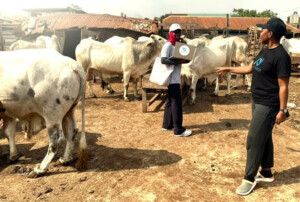
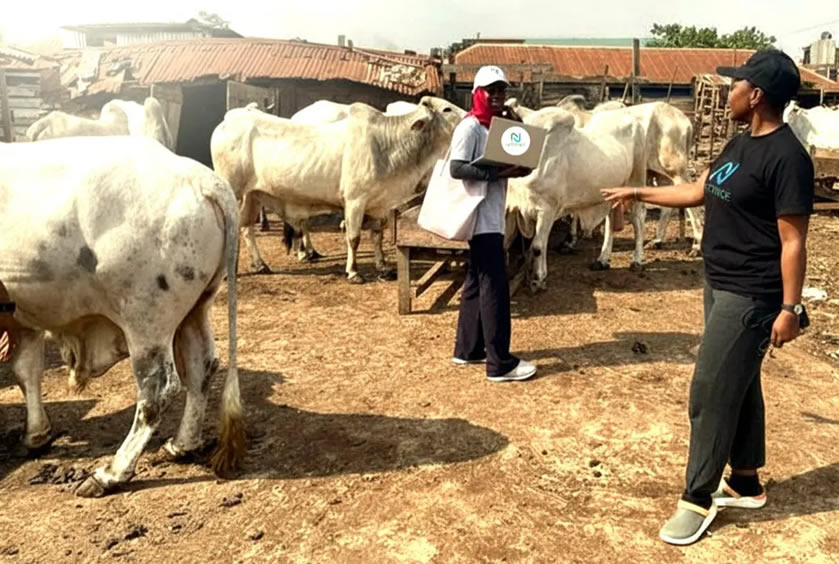
Preliminary field data emerging from an ongoing national monitoring programme led by Netzence Sustainability Limited (Netzence), in
partnership with 3logy Limited and the Federal Ministry of Livestock Development (FMLD), shows measurable seasonal and regional differences in methane emissions within Nigerian livestock systems.
This marks a decisive shift in the country’s ability to plan, finance, and verify climate action using evidence generated locally.
Early results indicate that livestock facilities monitored in Nigeria’s North-Central zone consistently exhibit higher methane-linked greenhouse gas emissions than comparable systems in the South-West. This directional pattern aligns with international research, which shows that livestock systems operating under hotter, more extensive, and open-grazing on average produced 10.82% higher enteric
methane emissions than semi-intensive or better-buffered systems. According to Associate Professor Sadiq Sani, Founder and Chief Executive Officer of Netzence, the variations observed in the current dataset fall within the scientifically established ranges, even within the relatively short monitoring window covered so far.
What distinguishes this programme is that it does not stop at identifying variation; it begins to explain it. The data reveals clear structural contrasts between the two regions. In the South-West, livestock production is dominated by semi-intensive and intensive systems, with herds comprising a higher proportion of young and mid-age animals, approximately 79.62%, alongside low to moderate daily movement. In
contrast, North-Central systems are largely extensive and agro-pastoral, characterised by higher daily mobility and a greater share of mature animals, estimated at 54.87% of herd composition. From an emissions standpoint, mature cattle and sheep have larger rumen volumes and higher feed intake, resulting in greater baseline enteric methane output per head. This structural difference directly explains the higher emission intensity and variability observed in North-Central readings.
Animal size further reinforces this trend. The dataset shows that cattle in South-West systems typically averaged a weight of 289.6 kilograms, compared to an average of 305 kilograms in North-Central herds. Sheep weights follow a similar pattern, averaging 37.5 kilograms in the South-West and 39.8 kilograms in the North-Central zone. Larger animals produce higher absolute methane emissions, and when this is
combined with open-field exposure and extended grazing hours, measurable emission spikes emerge, particularly during periods of high activity and thermal stress.
Source:
https://www.vanguardngr.com/2026/02/netzence-ministry-of-livestock-development-detect-rapid-seasonal-methane-spikes-in-iivestock-systems/